Kyeongju…..
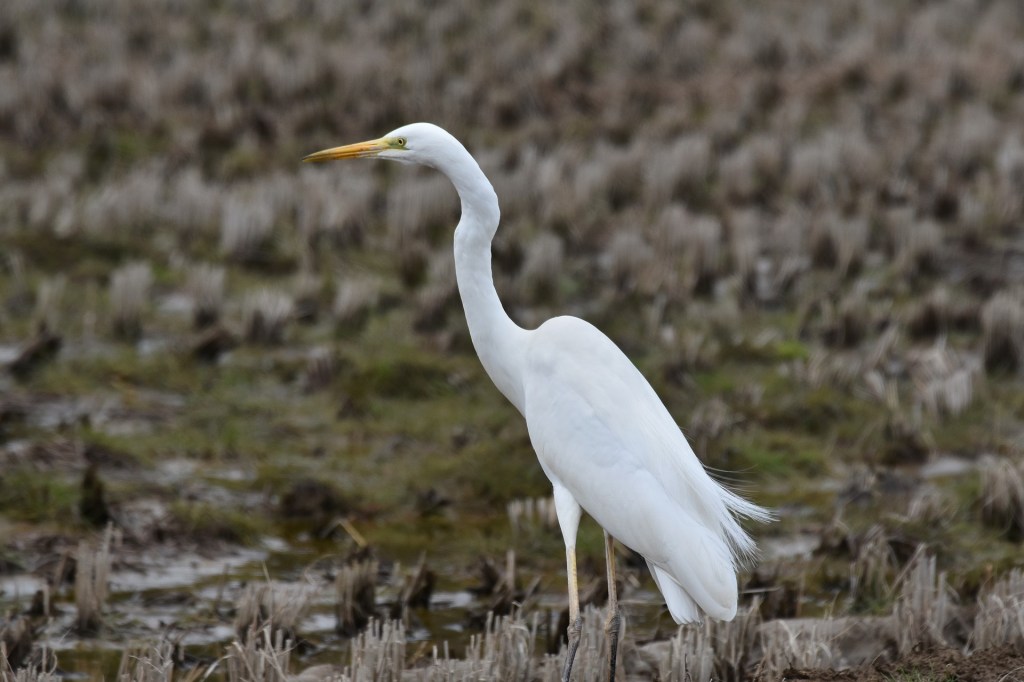
Kyeongju is a special city full of cultural relics that is a must-see for tourists in Korea. I planned for us to take an inter-city bus to get there from Seoul and to spend 2 nights. Thank goodness I could find a lot of information in that Lonely Planet guide, as internet wasn’t available much then. One morning we took the bus to Kyeongju and travelled through most of Korea and could see forested mountains and colourful valleys the whole way. I loved that virtually nothing, usually not a dwelling or a building, was on the mountains but trees. Most valleys had cities or at least greenhouse farms in them. The highways there were very modern and efficient. We had to go several hundred kilometers to the south on the eastern side of the country to get there. On the way we loved seeing white egrets in the streams and marshes. Since Canada is further north than Korea and colder, there are no egrets ever to see.
Travel within Korea was very affordable and downright cheap to me. Whether it was the subway, a bus, a plane or a taxi, prices were much lower than in Canada, in spite of the gas being much more expensive in Korea. So a bus ticket to Kyeongju was only around $16 per person and the distance was around 300km. The bus was nice and we only made a few stops.
Entry fees for everything there were low so all children could easily learn about their history and be proud of it. Income tax for the people was very low and there was no such thing as sales tax. There were so many great, better differences between Korea and Canada I saw and liked.
In Kyeongju, when we got out at the bus station, my guidebook said to go closeby and I would find several choices of affordable inns with rooms to stay in overnight. I followed the map in the book and found a place on a side-street. I asked the middle-aged woman running a restaurant with simple rooms upstairs if she had a room for us. It was only $23 for one night! Acquiring the room had to be done with a few Korean words like “bang issoyo???” (Do you have a room here?) and shoving Korean money at her. I had to say, “DooGae” and put two fingers up, meaning 2 nights. We had some sights to see while we were in Kyeongju so the room could be simple, as we weren’t going to spend much time in it. There was no elevator but the room was quiet and had a bathroom and we never did see anyone around for the whole time we were there. It was very different from Seoul. They were trying to keep Kyeongju traditional-looking and not advanced with no huge shiny office buildings like in Seoul. I remember missing the amenities you could get in Seoul like a cup of coffee here or there, a western chain restaurant or even seeing an English word on a sign somewhere.
It’s awful to not exactly remember our schedule from 20 years ago now, but I certainly remember seeing the sights I had wanted to see and some other surprise things also. I know I got us to take a bus or taxi to the most-visited Buddhist temple by tourists in Korea, Pulguksa. However, it was a special day at the temple when we went, and the famous front of it, where there were several distinctive stone-bridge staircases, was covered up by a huge banner. It seemed to be an important event with a high-level monk speaking to the crowd the whole time. We walked through the grounds behind him just the same.
I do remember it was too hot for me, even though it was October, and soon after our arrival in Kyeongju I had to get a taxi to take us to a place where I could buy a hat as a sheild from the strong sun. The sale stand was just an outdoor area with items on the pavement like unattractive hats you could buy. I thought my hat was really a man’s hat but it’s all I could find and I was desperate. It was so ugly I never kept it, but I was thankful to have it at the time.
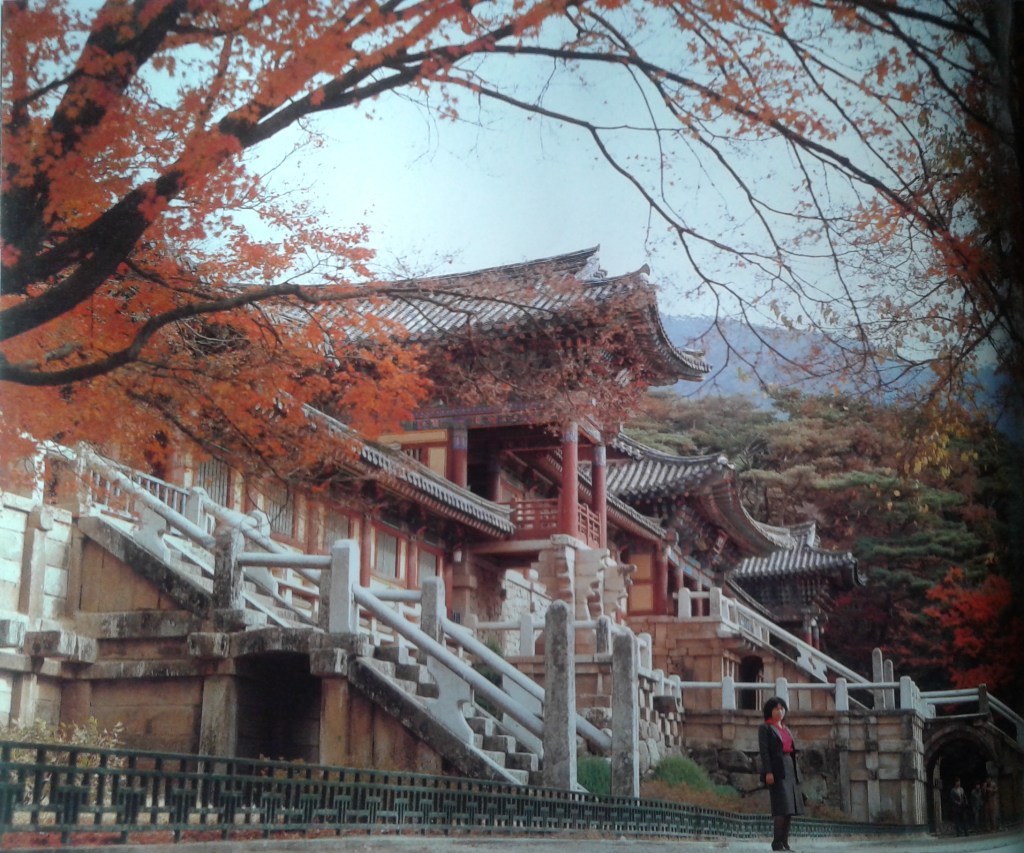
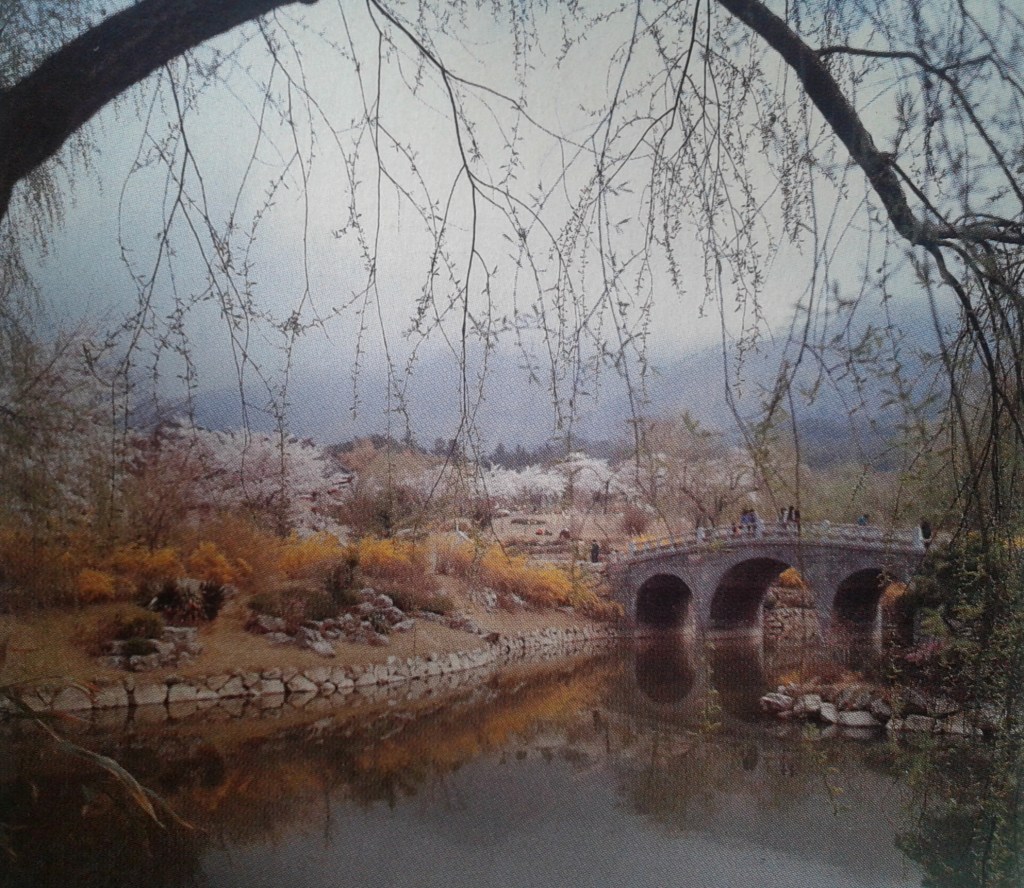
When you enter Pulguksa, the first thing you come upon is the beautiful pond and stone bridge above. My picture was not as good as it should be because of the bright sun. I had seen and heard so much about this temple that I was thrilled to be there. Robert wasn’t very thrilled, and said all Korean traditional-style buildings were the same. I wholeheartedly disagreed.
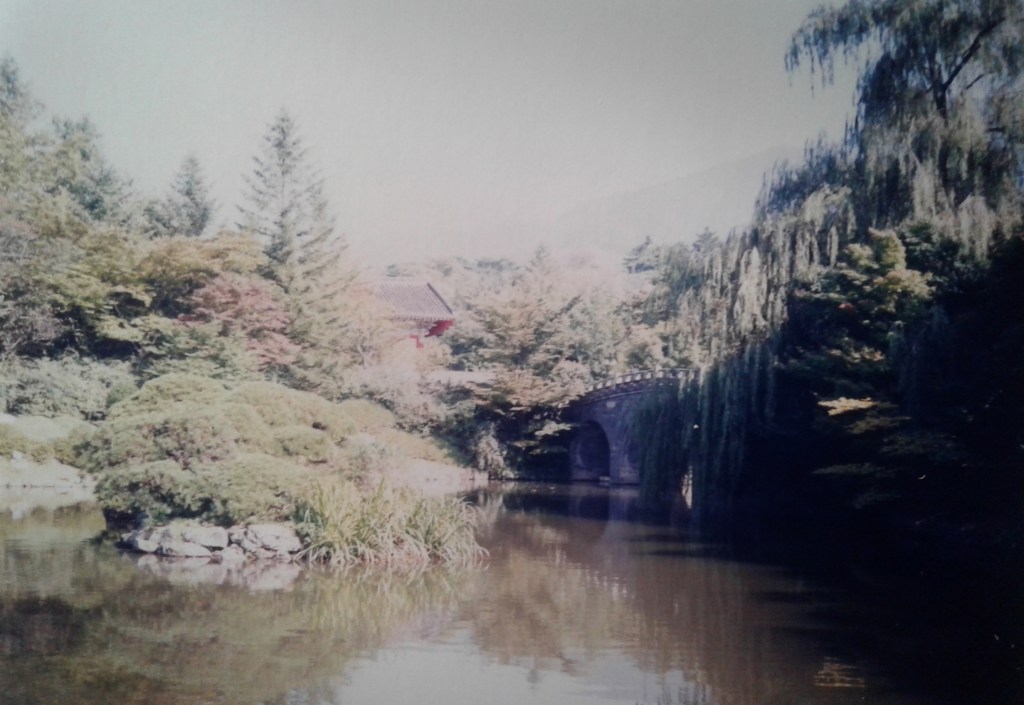
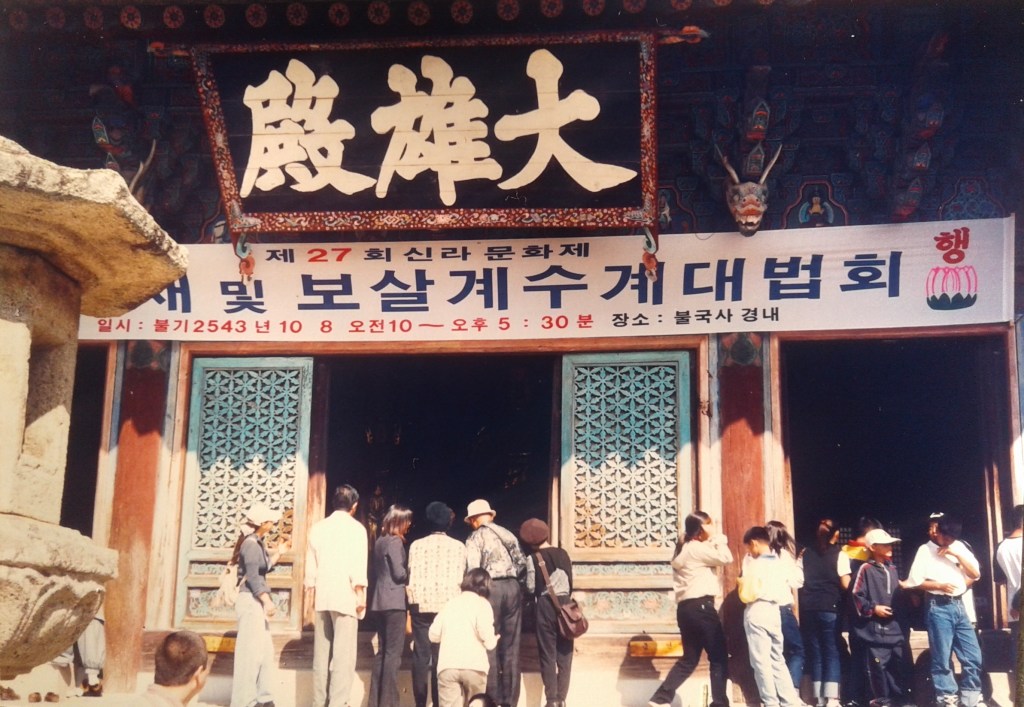
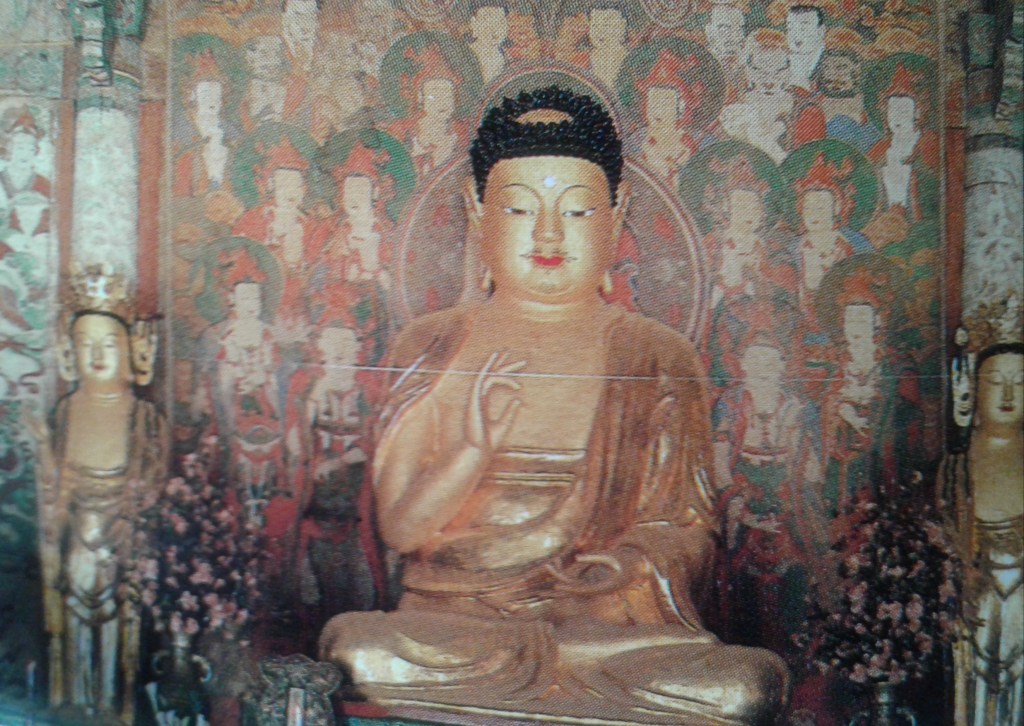
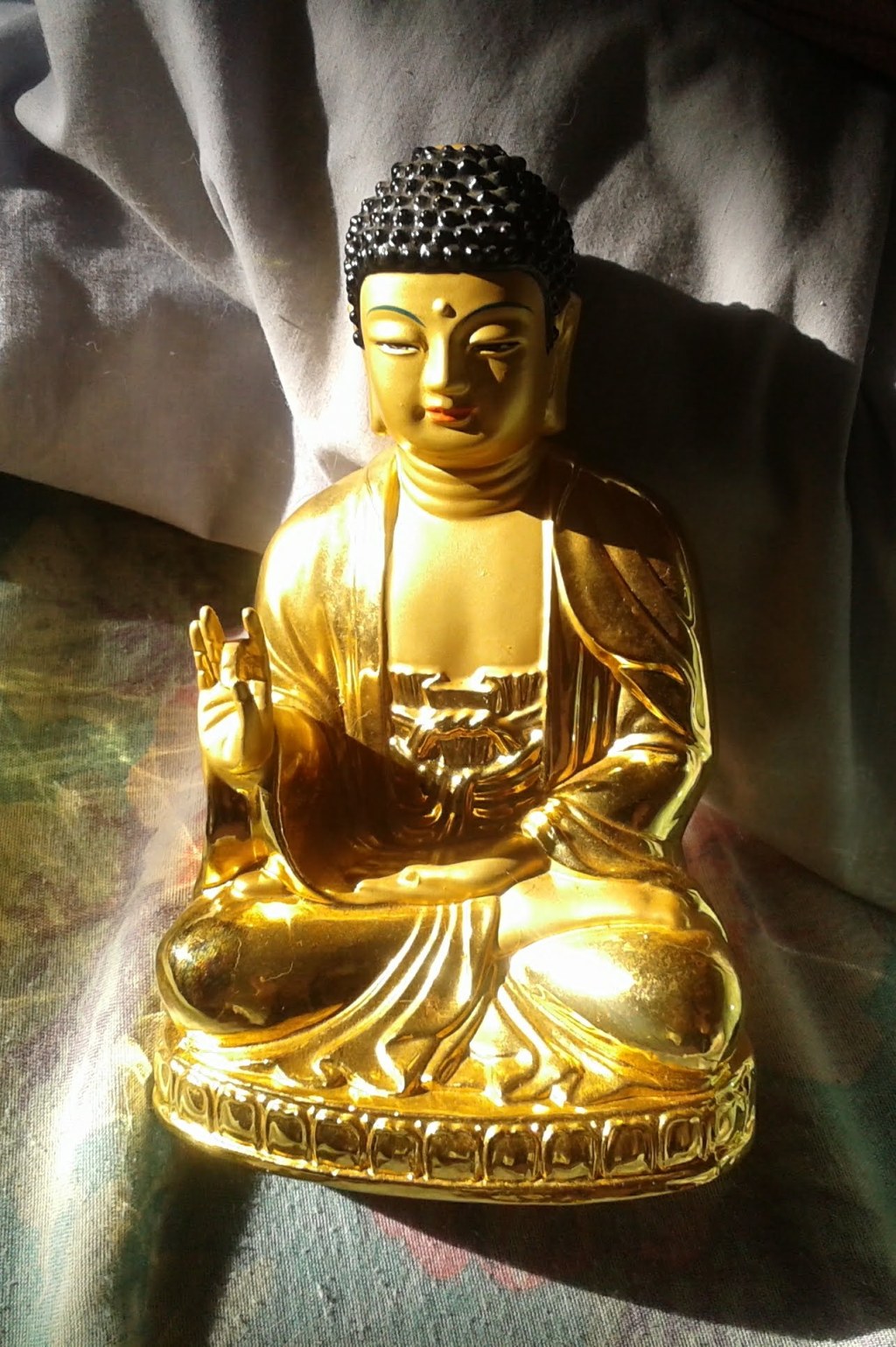
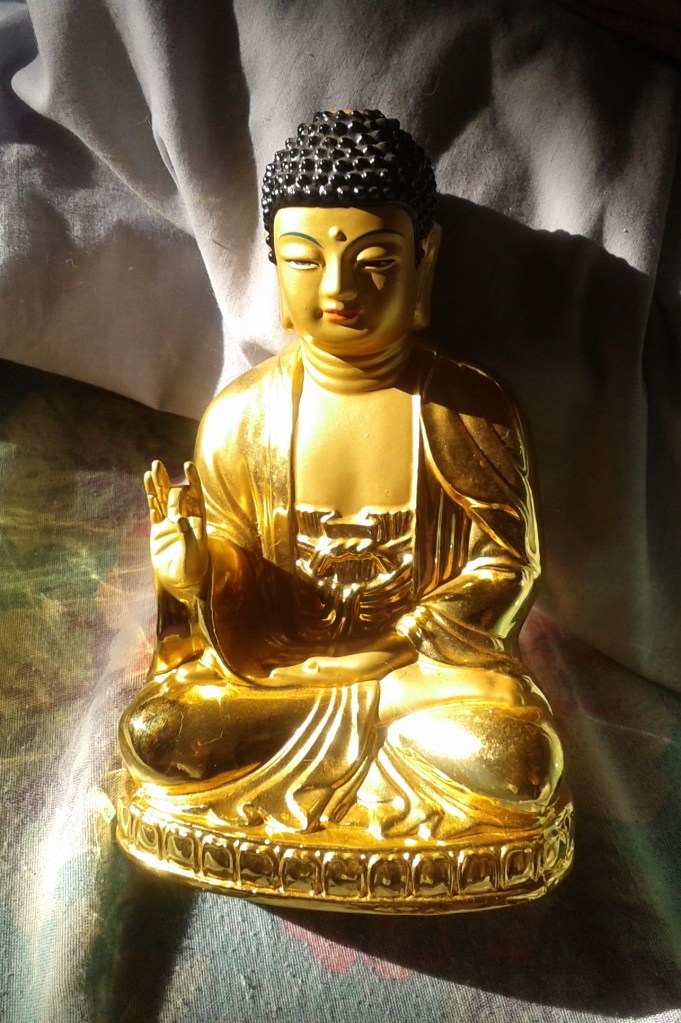
All Korean temples have statues of Buddha in them. They’re usually gold-coloured. At Korean temples, the monks’ dress was different from other countries’ dress, and the design of the statues and buildings were unique to Korea too. I never did see the inside of any main temple buildings, as people were trying to seriously meditate and worship at all of them. At PulGukSa, even the stone walls outside were distinctive from other sites and there were special artifacts to see also.
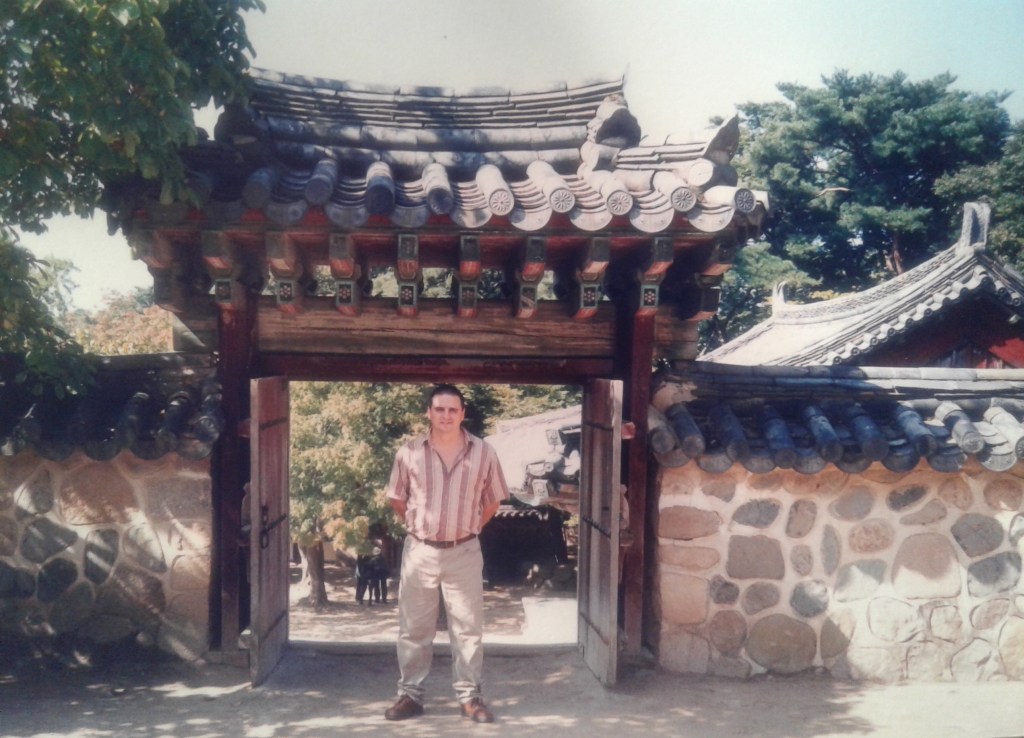
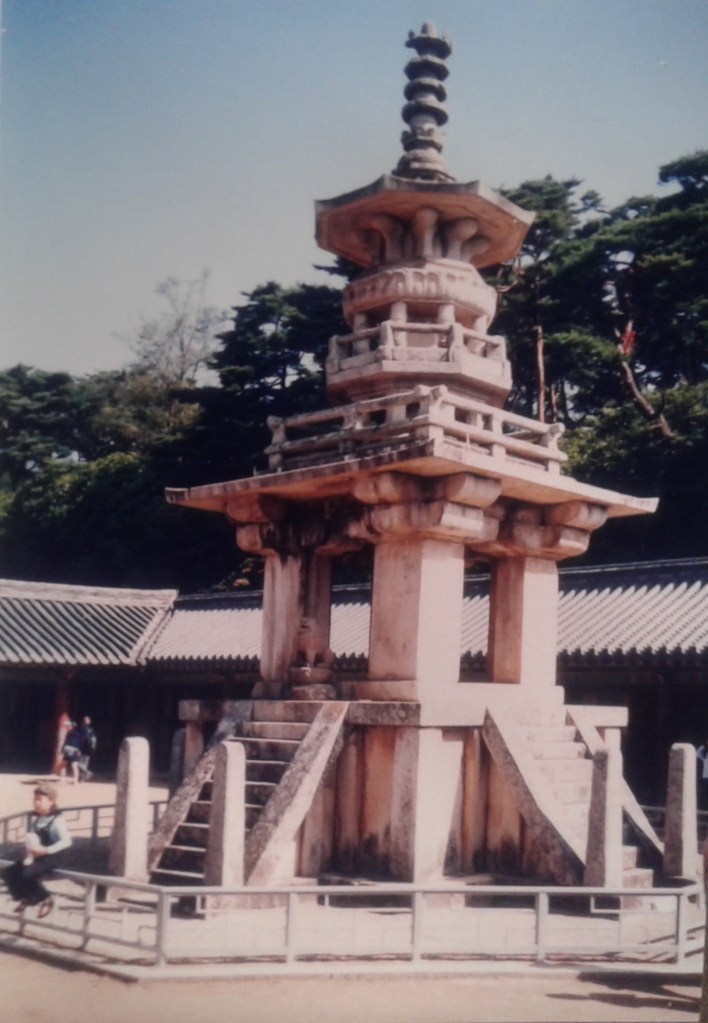
When we were finished seeing the temple, we came out near a large tourist village with traditional buildings peppered on the hill below PulGukSa where you could stay overnight or get a special meal. I had read in my guidebook that women came to get customers to go to their dwellings to eat a meal or have a homestay overnight. This is what happened. A Korean woman hailed us and wanted us to come to her house to have a Korean lunch. We did need to eat after viewing such a large place and it was lunchtime, so we followed her to one of the tile-roofed buildings. I ordered soy-bean paste stew for us. She made it in front of us and served us each a huge stone bowl that was hot and the stew sizzled. It was perfect. We could look at the scenery and mountains while we ate. I kept looking up at one extremely beautiful mountain and the woman said, “Sokkuram…” It was where we were going next – a Buddhist statue in a grotto in that very mountain!
For me, seeing Sokkuram Grotto was the main attraction to visit on my vacation. Whenever I saw a picture of the statue I thought it would be so exciting to see.
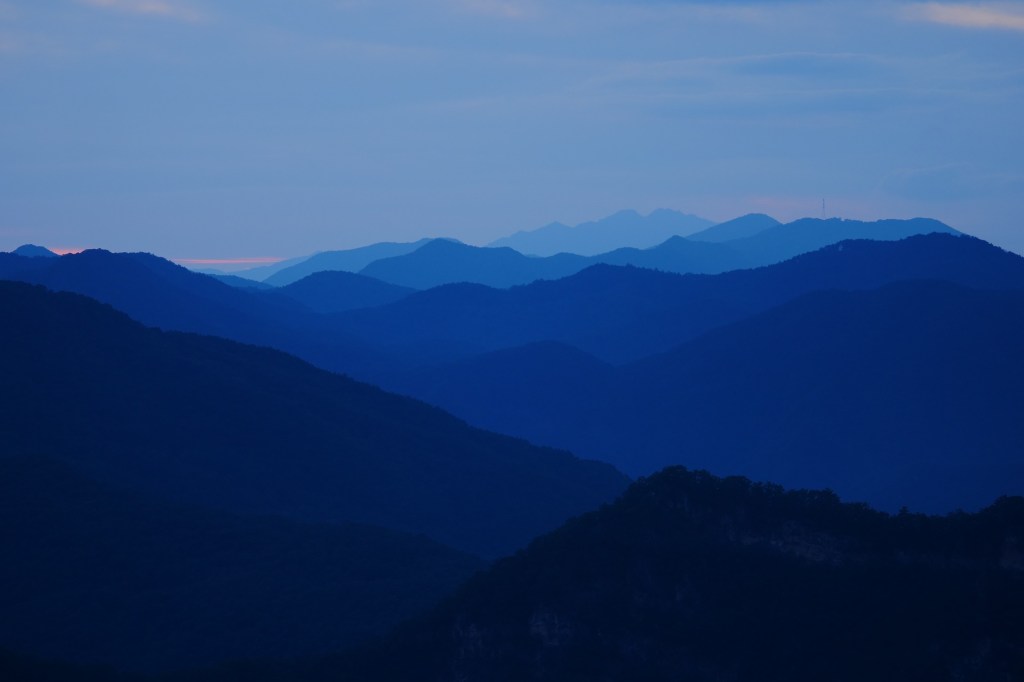
I only realised years later that we had made a pilgrimmage to the grotto when we went to see the special buddha that day. It’s considered to be the most beautiful statue of Buddha in all of Asia. The grotto, with the granite Buddha and carved Buddhist figures surrounding him in Sokkuram mountain, was rediscovered after having been forgotten for years when a postman had to find shelter from a storm in the 1950’s by going in the cave. It’s astounding that people could create such carvings in a cave hundreds of years ago and its mysterious as to how they were completely forgotten for years. Many Korean people were making the pilgrimmage that day as well as many students in their school uniforms. We had to wave numerous times and say hello, as they kept hollering, “Hello!!!” happily when they saw us. It’s a unique experience all around.
We took a special bus to the top of Sokkuram Mountain first of all. The bus went extremely fast up a winding road at the edge of cliffs all the way up. At the top, there was a nice view of all of the mountains surrounding this area. There was a huge traditional building also. Everyone had to take a long hike through a wooded path from there to get to the grotto. I knew from reading my Lonely Planet book that there were no pictures allowed and that the buddha was behind glass. The whole experience was wonderful in spite of those things. It was probably a dollar for the bus and I don’t think there was a fee to see the buddha.
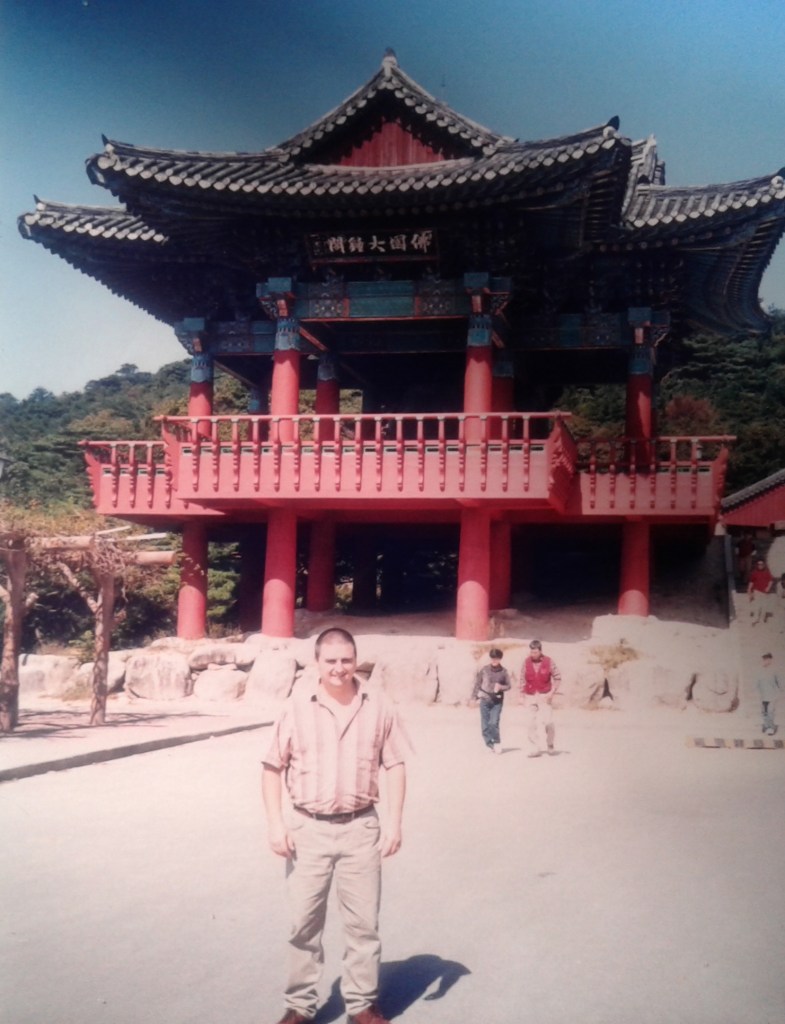
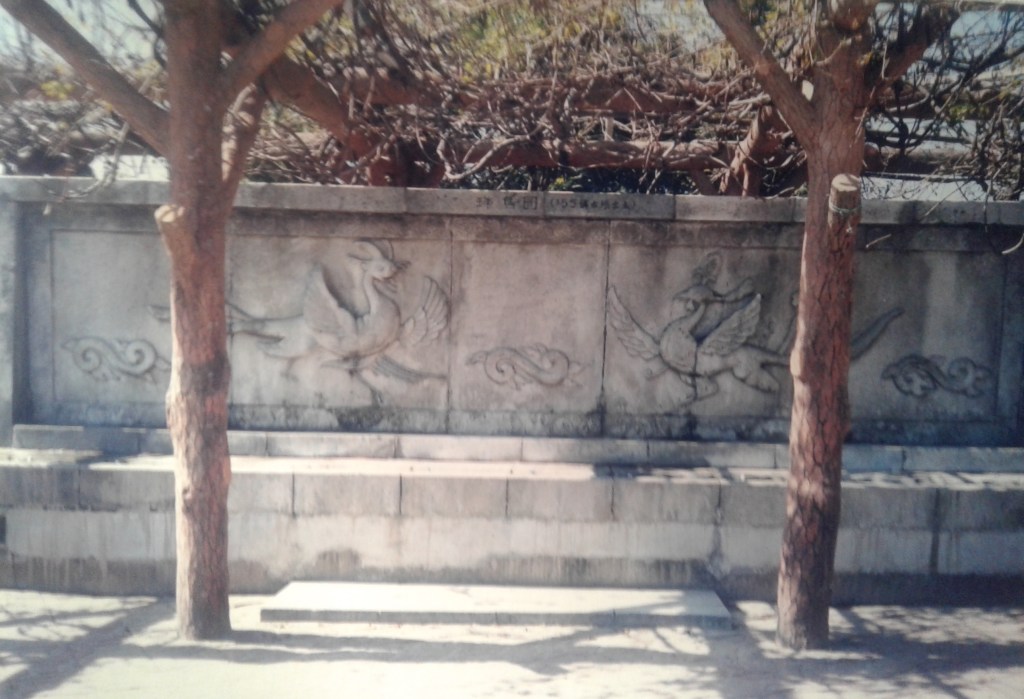
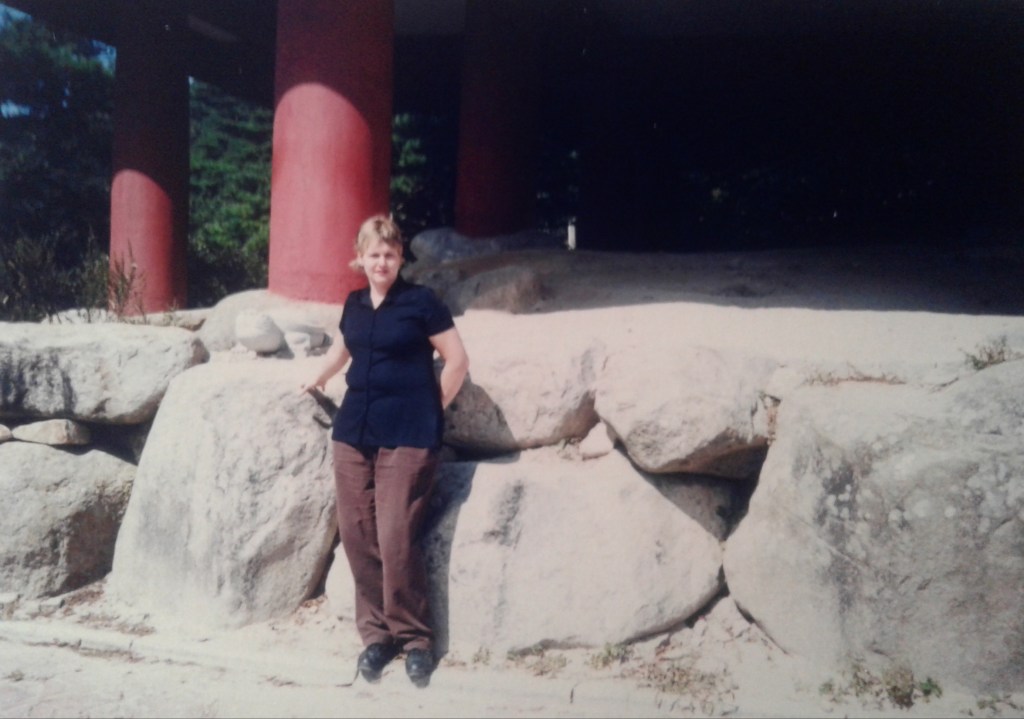
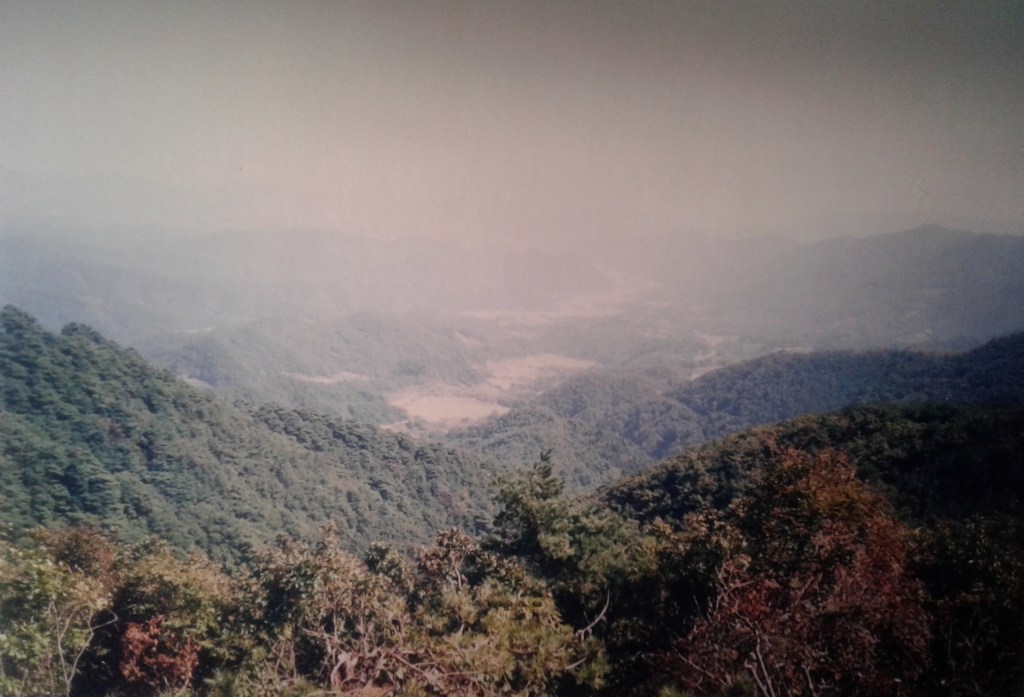
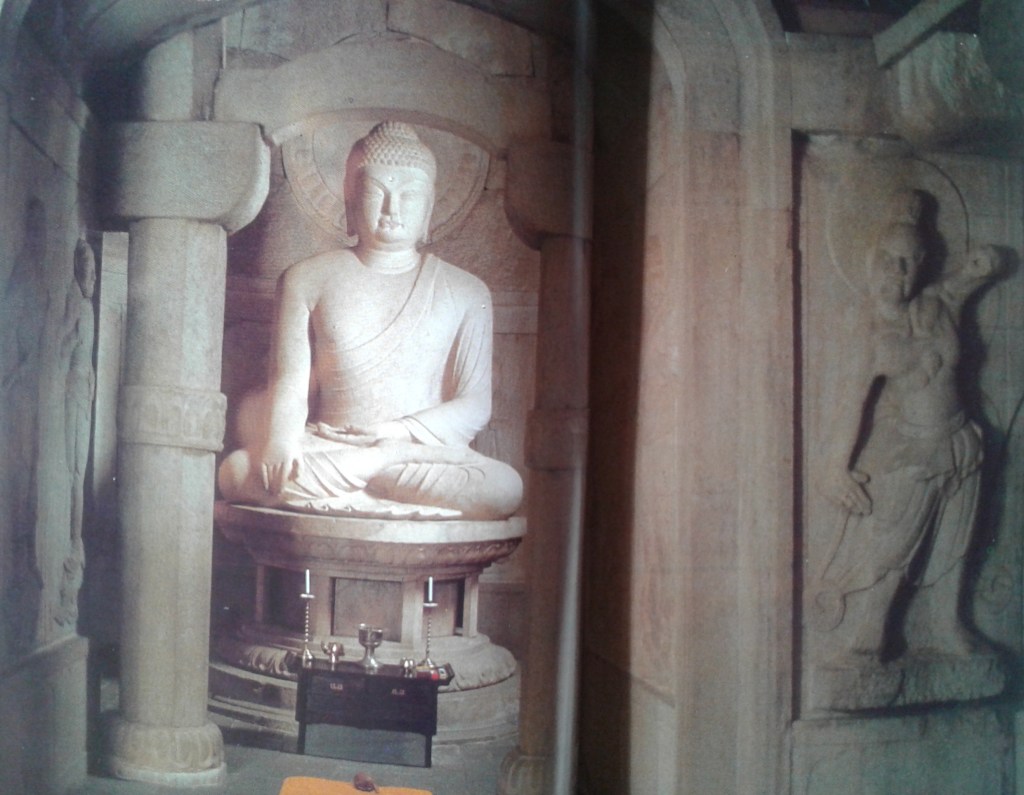
At the end of the more than one-hour trek through the forest, was a little building where you lined up and waited to pass through the inside or front of the grotto where the beautiful pinkish-gold granite Buddha sat. You had seconds to admire the statue behind the glass and many people would line up to do it over again. We only did it once. A Korean man who was near us in the line-up exclaimed to us after we had gone through, “…That’s it!!… It’s all finished!!!… All that way and it’s done in a minute!!!…That is all…!!!..” I think he and his wife went in the line-up again. We just smiled and chuckled. One remarkable thing was that the granite walls surrounding the Buddha were all carved with other Buddhist figures also. Sokkuram Grotto is studied as geometrically and mathematically designed so it’s interesting on many levels.
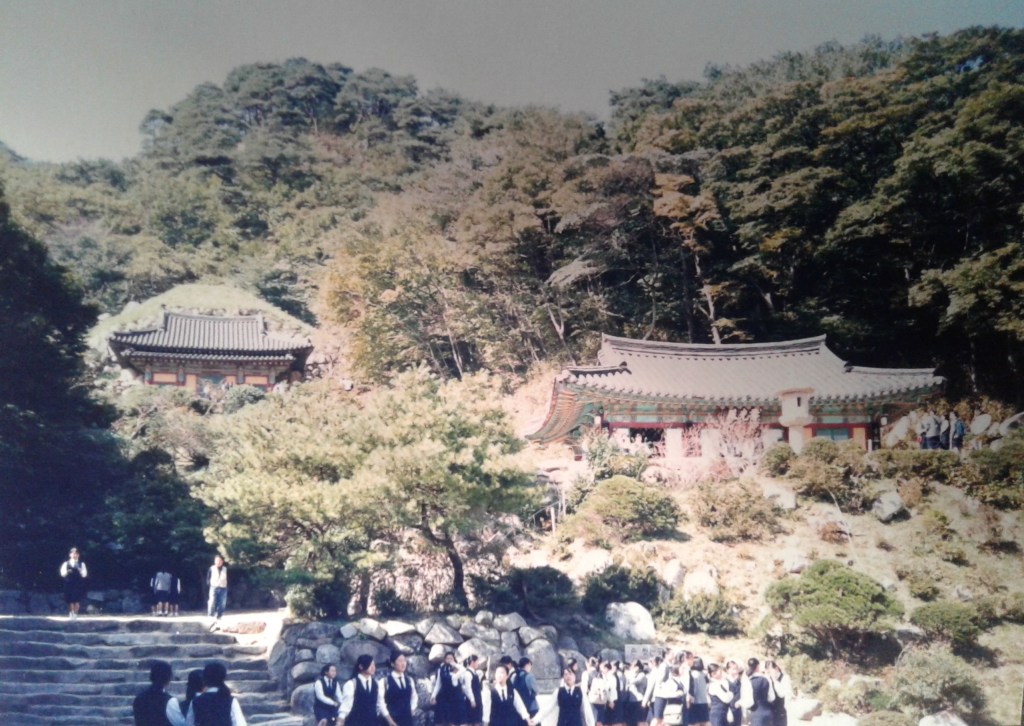
The fact that we saw Kyeongju, and had the strange fast, winding bus ride and saw others making the pilgrimmage certainly made the trip worthwhile. The view of the mountains and the chipmunk and egrets made it worthwhile too.
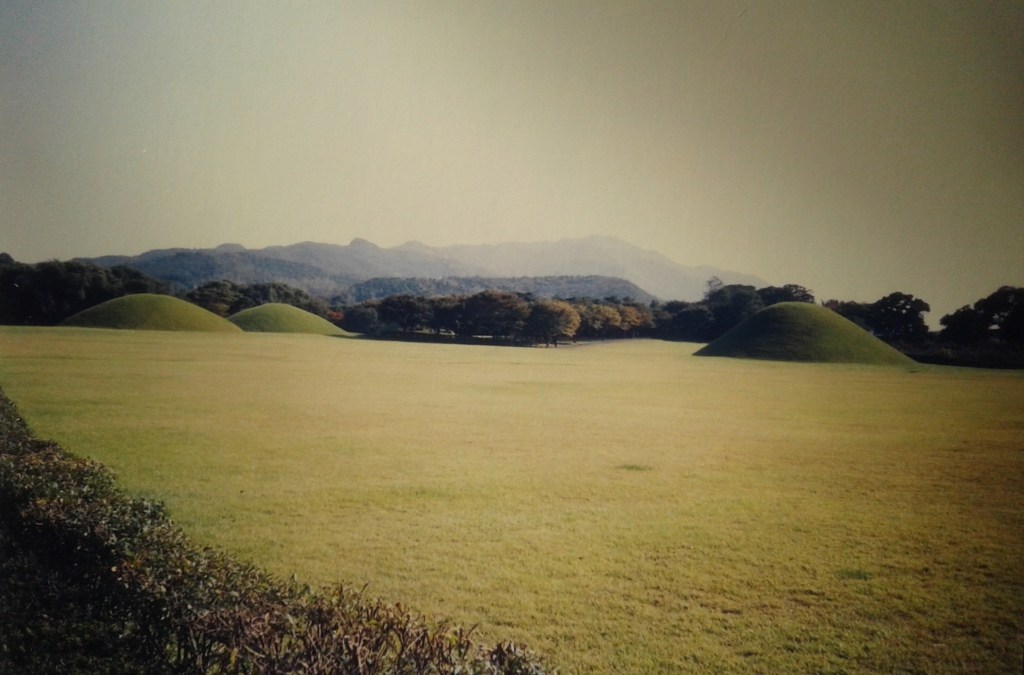
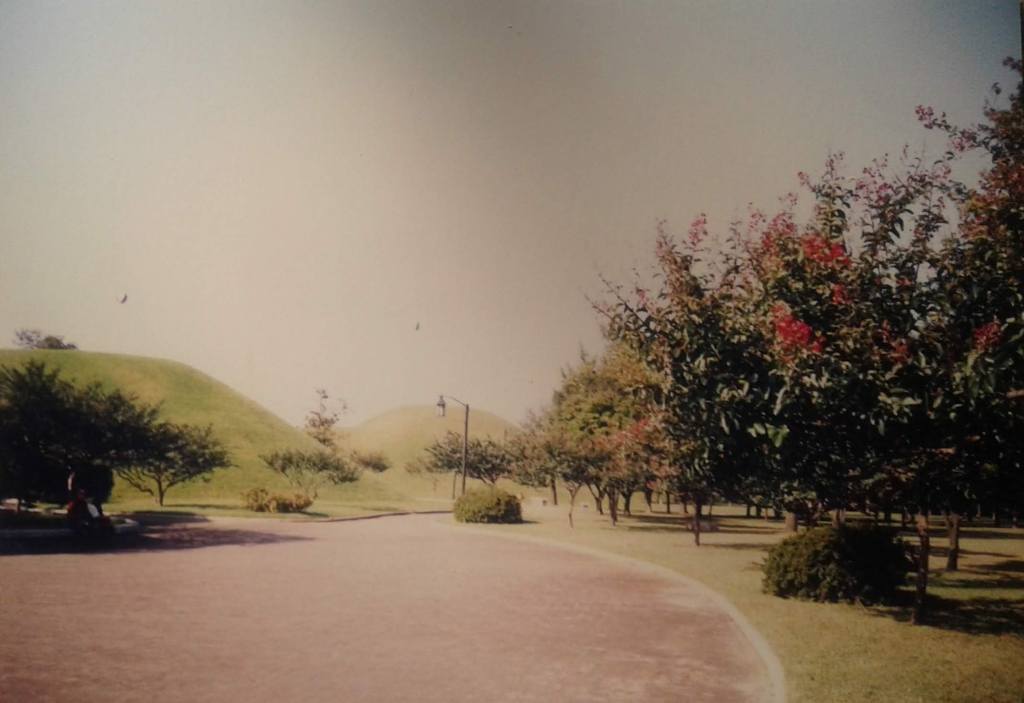
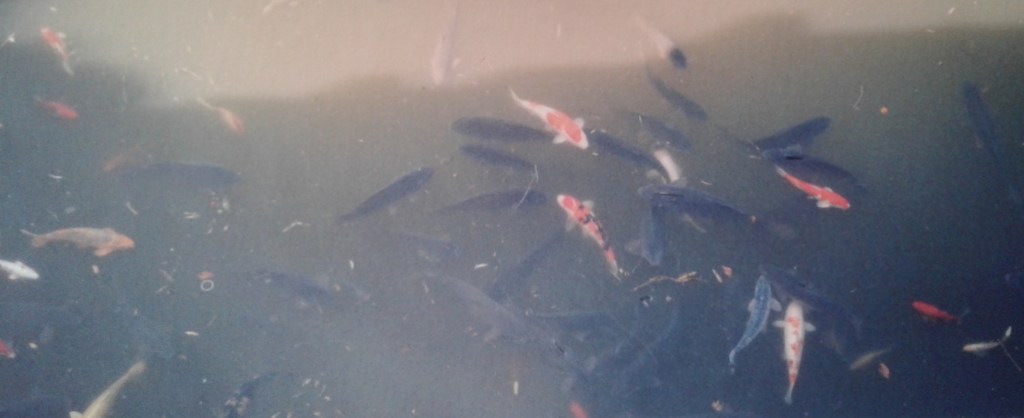
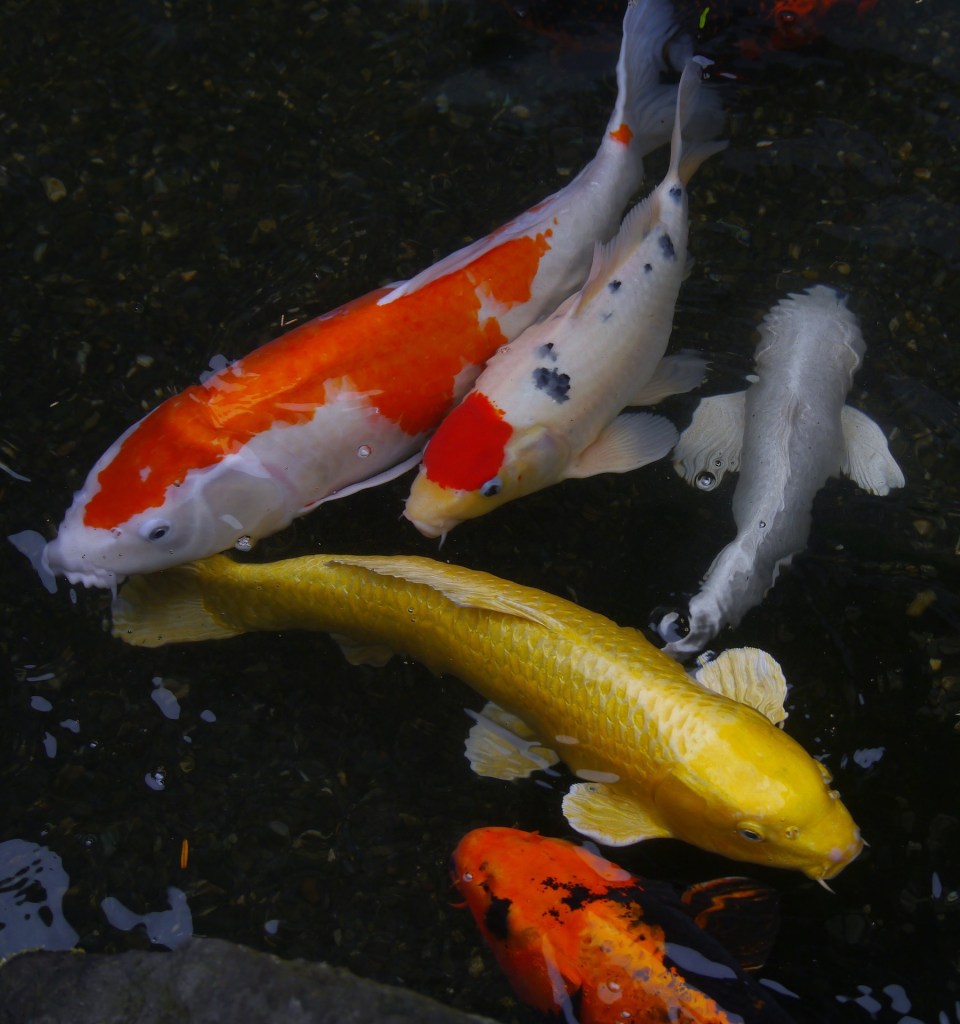
On our next day in Kyeongju we went to see some historical artifacts. We went through one of the parks that had “tumulis”, or mounds where royalty or their precious belongings were buried near them hundreds of years ago. While we were there, I fed a small box of crackers to the koi in a pond. It was thrilling. The koi were huge and one was peach-coloured, one was orange, one was yellow, one was gold and on and on. They loved the crackers! We also sat outside of the park, near it, and spoke to an old Korean man who was sitting there. Funny, you can communicate a lot with just a few words and gestures. He wanted to know what country we were from and we also said we were married, I remember. I knew how to say I was an English teacher (yong-o kyosa) and now I say “IMF Time…” instead of learning how to say 1997. I can say where I lived and and I know “sorry”, “wait”, and “excuse me”. I like to say “Han guk”, meaning South Korea and “saram” is people. So when I speak to a Korean person I can mention Korean people or Canadian people.
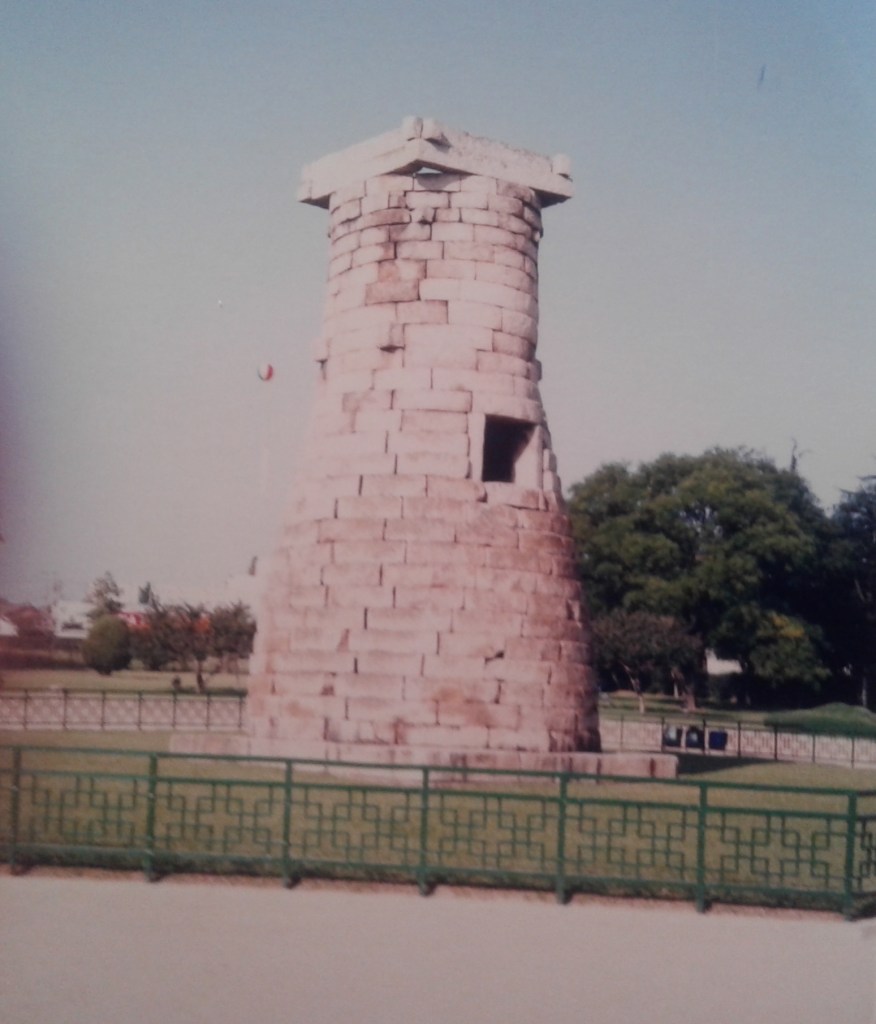
We came across the old observatory and I was happy to imagine the royalty studying the stars many years ago by looking out of this stone structure.
On our second night at the inn, we went up to the rooftop patio and had a relaxing, enjoyable time looking at the area in the dark. I found a bottle of delicious milky-looking rice wine at a store nearby and had some of that while we were up there. This is a particular type of rice wine called makkeoli that is from old times. It’s sweet and pleasant, not strong-tasting and clear like their most commonly bought rice wine that to me is like vodka(soju). We looked at all the mountains surrounding Kyeongju in the dark and I tried to study the few mysterious lights on them which showed where perhaps houses or temples must have been – I wondered what was where those lights were. The time up on that roof was unexpected and unplanned but added to the experience of the trip.


 My Memories of Seoul
remarkable! Famous Photographer’s Exhibition Breaks Attendance Records 2025 polished